

DENTAL ARTIFICIAL
INTELLIGENCE SESSION
Ada cerp/PACE credits
When AI Should Remain Silent: A New Clinical Ethic for the Age of Intelligent Medicine
Artificial intelligence is rapidly transforming clinical practice, offering unprecedented capabilities in diagnosis, prediction, and decision support. Yet as these systems become more sophisticated, a critical and underexplored question emerges: what happens when intelligent systems fail to communicate their limits?
This lecture introduces the concept of algorithmic silence—the absence of expressed uncertainty within AI-driven clinical outputs. While much of the current discourse focuses on accuracy and performance, far less attention has been given to the risks associated with what AI systems do not reveal: unrepresented data, unseen variables, and context-dependent blind spots. In clinical medicine, decision-making has always been shaped not only by available evidence, but by an awareness of its boundaries. However, contemporary AI systems often present conclusions without conveying the uncertainty, incompleteness, or contextual limitations underlying them.
Drawing on examples from dentistry and broader medical practice, this talk examines how algorithmic silence may introduce a new category of clinical risk—one that is not defined by incorrect recommendations, but by the absence of critical information. The lecture further explores how increasing system complexity, including emerging AI architectures, may deepen this opacity rather than resolve it.
In response, a new ethical framework is proposed: one in which the capacity of AI systems to abstain, defer, or signal uncertainty becomes as important as their ability to generate outputs. This shift redefines the role of the clinician—not as a passive recipient of algorithmic advice, but as an architect of clinical context and a guardian of interpretive responsibility.
As medicine enters the era of intelligent systems, the most important question may no longer be whether AI is correct, but whether it knows when not to speak.
Artificial Intelligence and Dentronics in Laser Dentistry: Revolutionizing Diagnosis and Treatment
Lasers are utilized in various diagnostic and treatment systems, ranging from oral cancer and caries detection devices to imaging systems like digital scanners. They also serve as therapeutic tools, from thermal ablative devices to non-thermal photonic systems used for healing and pain management.
The integration of Artificial Intelligence (AI) in laser dentistry is transforming clinical practice by enhancing diagnostic accuracy, optimizing treatment planning, and improving patient outcomes. This presentation discusses the current applications of AI in laser-assisted procedures and the potential for future advancements. AI systems are utilized to interpret diagnostic data from imaging technologies, guiding laser treatments with unparalleled precision. These systems facilitate early detection of dental diseases, including oral cancer and caries, and ensure patient-specific treatment plans, minimizing the risk of human error.
AI-driven lasers in minimally invasive procedures have the potential to provide enhanced precision in cavity preparations and hard tissue ablation, thereby reducing tissue thermal damage and accelerating recovery. Additionally, the development of femtosecond laser technology, integrated with AI, offers improved outcomes in restorative dentistry by minimizing thermal and mechanical damage. The application of robotics, such as the “LaserBot” for tooth crown preparation, represents a significant advancement in the field, showcasing the potential for AI-assisted robotics to increase efficiency and precision.
Another groundbreaking development is the emergence of Catalytic Antimicrobial Robots (CARs), which offer a novel approach to eradicating bacterial biofilms in hard-to-reach dental areas. CARs, driven by AI, combine catalytic and magnetic functionalities to degrade biofilm structures, eliminate bacteria, and remove debris, providing a promising solution for combating infections in dental treatments.
However, the successful implementation of AI in laser dentistry is met with challenges, including data privacy concerns, algorithmic bias, and the need for robust regulatory frameworks. As the field evolves, overcoming these barriers will be critical to fully realizing the potential of AI in enhancing dental care. Future trends include the integration of AI with robotic-driven systems, augmented reality (AR), and virtual reality (VR) for improved clinical training, treatment planning, and precision-based interventions.
In conclusion, AI is poised to play a transformative role in laser dentistry, improving diagnostic accuracy, treatment outcomes, and clinical workflows, while presenting opportunities for future innovations in preventive and restorative dental care.
Teaching Objectives:
- To educate participants on how Artificial Intelligence (AI) enhances laser dentistry by improving diagnostic precision and optimizing laser treatment planning for various dental procedures.
- To demonstrate the application of AI-driven laser technologies in minimally invasive laser dentistry, focusing on their role in increasing precision, reducing thermal damage.
- To introduce participants to emerging trends in laser dentistry, including AI-assisted robotic systems and advanced laser technologies, and their potential to revolutionize clinical efficiency and patient outcomes.
Designing the AI-Augmented First Visit: From Data Chaos to Clinical Clarity
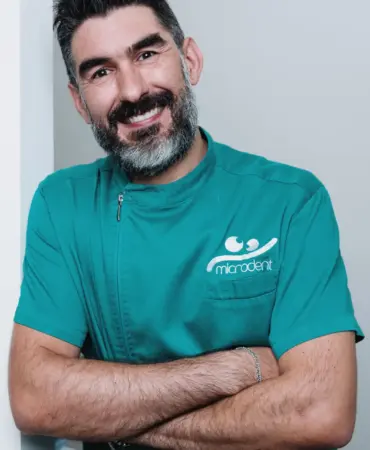
The first visit is where patients decide if they trust you – and where clinicians face the highest cognitive load. Forms, medical history, images, scans, expectations, money conversations: everything happens at once. In this session, Dr. Simone Stori shows how to redesign the new-patient exam with AI as a silent, background assistant rather than a gimmick.
Attendees will see a step-by-step workflow where AI pre-processes intake data, supports risk assessment, summarizes radiologic findings and generates patient-friendly explanations, while the dentist stays fully in control of clinical decisions. There will be illustrated how AI can shorten chair time, improve diagnostic consistency and make communication more transparent. The focus is practical: what to automate, what must stay human, how to avoid over-promising, and how to measure the impact on acceptance rates and long-term loyalty.




Contacts – Privacy e cookies policy
© 2024- AIO Cagliari Oristano – Via San Giovanni 97 – 09100 Cagliari – Partita IVA 03675540920
Webmaster by Mobilbyte